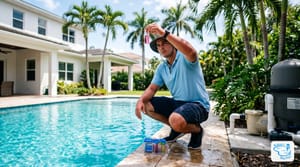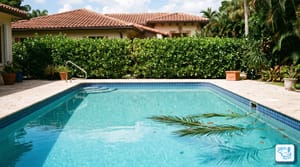
You grew up with a pool that closed in October. A cover went on, the lines got drained, antifreeze went into the plumbing. So when the first cold front crosses Miami-Dade and the morning air reads 52 degrees, the old habit says to shut everything down.
Do not. A Miami pool does not close for the winter. It changes what it needs, and the owners who treat it like a northern pool end up paying for the wrong fixes.
Miami Winter Is Not Cold Enough to Close a Pool
NOAA's 1991-2020 normals for Miami International Airport put the January average high at 76.2°F and the average low at 61.0°F. February runs 78.2°F and 63.2°F. Those are not freezing numbers.
The National Weather Service in Miami keeps the extremes on record. The coldest reading is 27°F on February 3, 1917. The longest stretch below freezing is three days, January 27 to 29, 1940. A cover and drained lines answer a problem South Florida has almost never had.
Your equipment keeps working in this weather, and so does the pool's need for circulation. Pumps here run 8 to 12 hours a day all year. A pool that sits stagnant under a cover through a warm December grows algae, not ice.
What Changes From November to April
Heat drives chlorine use. Water above 85°F burns chlorine faster, according to Orenda Technologies, and Miami pool water sits between 78°F and 90°F from May through October. As water cools, the demand falls, so a salt cell that ran flat out in August can run at a lower output now.
Hurricane season runs through November 30, so early November is not yet storm-free. Keep your equipment pad clear and your surge protection in place until the calendar turns.
Do not guess at the new setting. Test on your summer schedule for the first month of cool weather, then let the numbers decide. Write each reading down with the date, because a trend over six weeks tells you more than any single test strip. The PHTA ranges in ANSI/APSP/ICC-11 stay the same all year: pH 7.2 to 7.8, alkalinity 60 to 180 ppm, calcium hardness 150 to 1,000 ppm.
Pentair says the cutoff protects the cell, so the pause is by design. After a hard front, check the display for the COLD WATER light before you assume the cell is working.
Heaters Have a Cold Limit Too
A heat pump does not warm a pool on any night. Hayward's manual lists an operating range of 40°F to 115°F air temperature. Below that, the unit shuts down on low ambient. Hayward says to wait for the outside air to reach 60°F before you expect it to restart.
Do not lean on the heater to protect the pool from a freeze. Hayward says so in the manual. In the rare freeze warning, the pump must run nonstop, and that is the one night you leave the timer alone. Our guide on salt cell upkeep covers what to check on the cell when the cold lifts.
Use the Dry Season to Inspect and Repair
Winter is also when your calendar fills up. Snowbirds start arriving in October, guests visit through the holidays, and a pool that sat untouched since spring needs attention before the first party. Do the inspection before the visitors land, not after.
Rain tells you when to schedule work. NOAA's normals show October at 7.7 inches in Miami, then November at 3.53, December at 2.44 and January at 1.83. About 15.6 of the year's 67 inches fall from November through April.
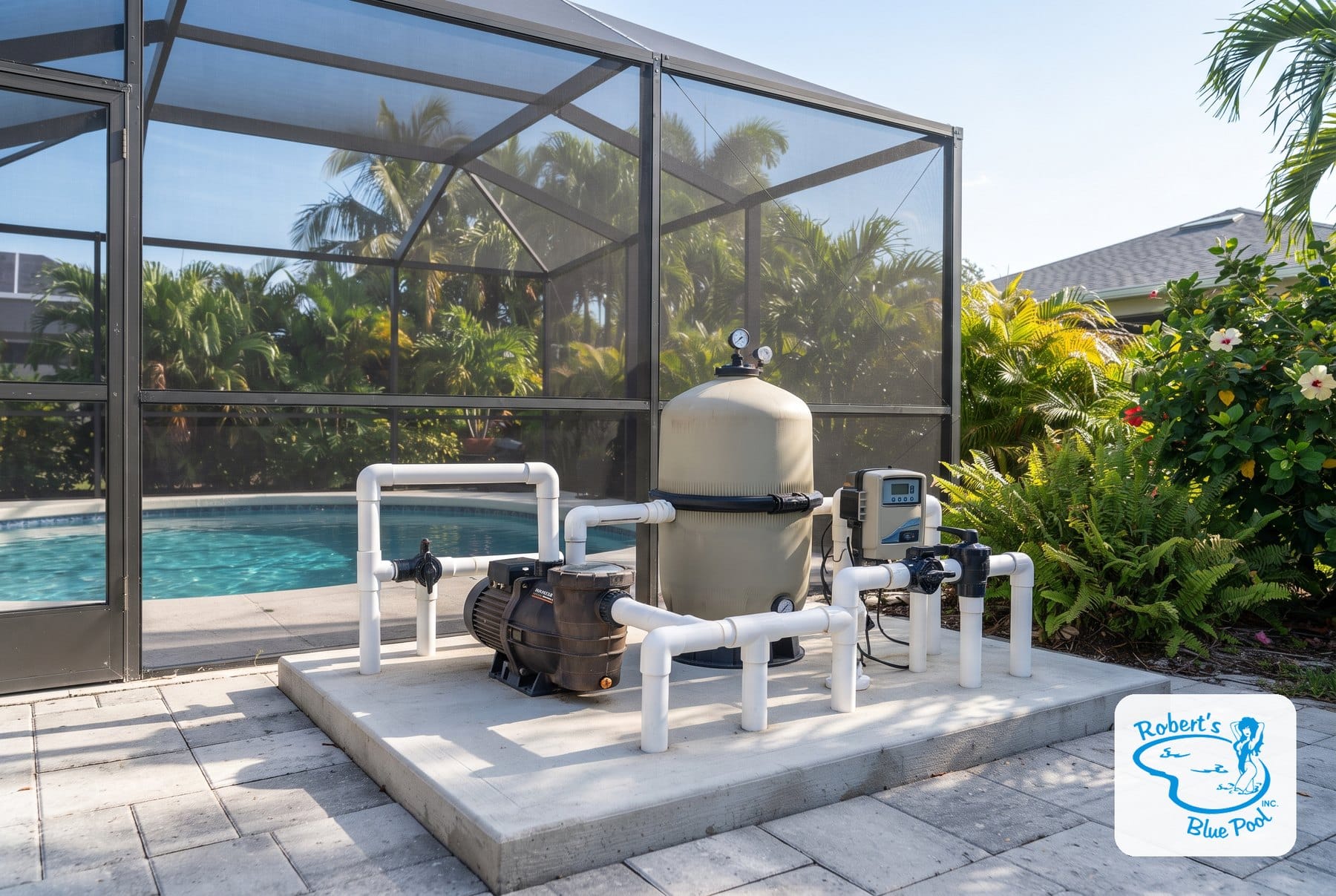
That is your window. Walk the equipment pad and look for three things. First, the salt cell. Pentair says to clean it every 3 to 6 months, sooner if white or gray scale builds on the plates, and Miami's hard fill water speeds up scale on the plates. Second, the pump. Older single-speed pumps run about 8 to 10 years, and a pump near that age is worth a look before summer asks too much of it. Our post on when to repair or replace pool equipment walks through the call. Third, tile, coping and plaster, where cracks and stains show before the rains return.
Resurfacing belongs on this list too. A high water table in the wet months complicates any drained shell, so the dry months are when the work goes cleanly. Read why rain sets the renovation calendar before you book. Anything involving wiring, a drain or a drained pool should go to a licensed professional.
Robert's Blue Pools has serviced Miami-Dade pools since 2007. We would rather walk your pad in December than meet your pump in July.
Want a December walk-through of your equipment pad? Call Robert's Blue Pools at (305) 762-7665 and we will tell you what can wait until spring.