

The autofill valve in a Coral Gables backyard clicks on every afternoon. The water line looks right. The pool looks fine. Then the water bill arrives, and it is higher for the third month running.
That bill is the first of five signs. Miami-Dade pools fail in a predictable order, and each sign shows up a season or two before the repair turns into a renovation. Here is what to watch for, and when to call.
Sign One: The Water Level Drops More Than a Quarter Inch a Day
A pool in a warm climate loses about 1/4 inch a day to evaporation. More than that is a leak, not weather. An autofill hides the loss by replacing it, so the only evidence is your meter.
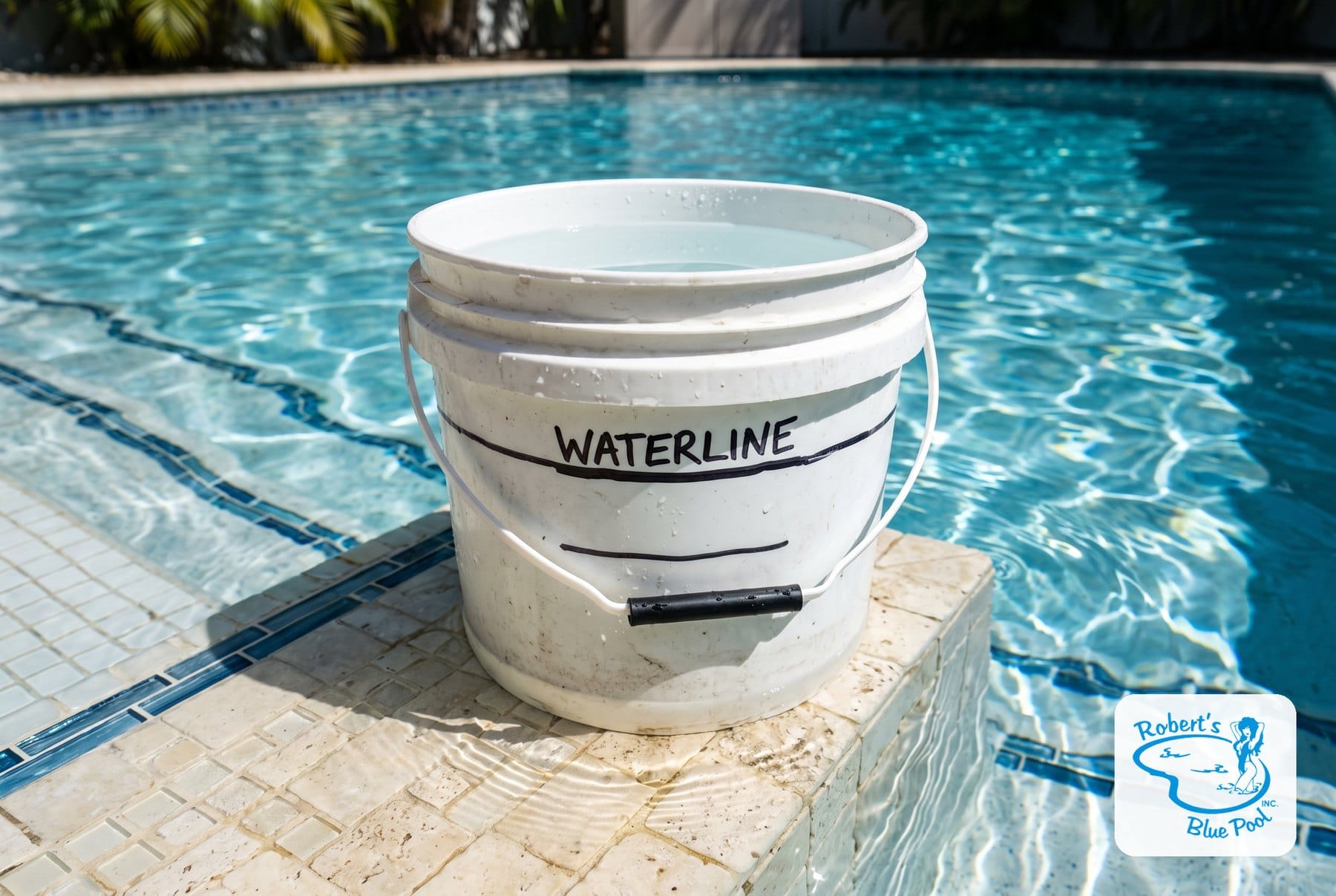
Run the bucket test. Set a 5-gallon bucket on a pool step, fill it to the pool's water level, and mark both levels. Turn the autofill off, leave the pump running, and compare after 24 hours. If the pool dropped further than the bucket, something is leaking.
The EPA's WaterSense program estimates a pool leak can waste more than 6,000 gallons a year, and even a minor crack can lose 2,000 to 5,000. In Miami-Dade the bill is steeper than the national average. On a 15 by 30 foot pool, a leak of 210 gallons a day adds up to about 6,300 gallons a month. At the county's top residential block rate, that is about $152 a month in water and sewer charges.
The high water table matters here. Groundwater sits 3 to 6 feet below the surface in many Miami-Dade neighborhoods, and it can mask a leak. Our guide to how Miami pros find leaks you cannot see covers the three professional methods, and the real cost of a slow leak goes through the water math.
Do not drain a leaking pool to look for the source. Hydrostatic pressure from the water table can lift an empty shell out of the ground. That is a job for a professional.
Sign Two: A Crack You Can Fit a Coin Into
Hairline cracks narrower than 1/8 inch are often cosmetic. They sit in the plaster and do not reach the shell. A crack wide enough to take the edge of a coin is likely structural and runs through the gunite.
Watch for the crack that moves. A crack that opens and closes as the water level changes is breathing, which means the shell is shifting. South Florida's sandy, limestone sub-base moves more than clay or rock, so Miami-Dade pools crack more often than pools in most of the country.
Sign Three: The Pump Gets Loud, or Runs Hot
Your pump runs 10 to 12 months a year here. That wear adds up faster than it does in a seasonal market. A single-speed pump runs about 8 to 10 years. A variable-speed pump with a sound install runs 12 to 15.
Grinding, a shrill whine, or a motor too hot to touch means a bearing or seal is on its way out. Repair a young pump. Replace an old one that has needed repeat service. FPL's 2026 residential rate is about 14.5 cents a kilowatt-hour, and the DOE's 2021 pool pump rule means most single-speed replacements are no longer sold anyway.
Any new wiring on a pool pump needs an electrical permit in Miami-Dade. A pump that trips its GFCI again and again has a ground fault. Stay out of the water and call an electrician.
Sign Four: Stains That Come Back
Brown and green stains that return after treatment point past the surface. Copper is common in Miami, where hard tap water meets heater exchangers running at high temperature all year. Algae that blooms again after a clean test can mean the plaster itself has gone rough.
A worn finish is a resurfacing job. A stain from an active leak or crack is a repair, and it comes first. Resurfacing seals minor surface leaks, but structural cracks and plumbing leaks must be fixed before a new finish goes on.
Sign Five: Lifting Tile and Coping
When a return line leaks underground, water erodes the sandy base into voids. The voids show up later as deck settlement and coping that separates from the shell. Tile that lifts along one stretch of the waterline is seldom a tile problem.
This is the sign owners miss longest, because it looks cosmetic. By the time coping moves, the leak has been running for months. Compare the date you first noticed higher water bills with the date the tile started to lift.
When repairs pile up, the choice between fixing and renovating gets real. Our repair or renovate decision guide covers the cost threshold, and why the shell and the finish are separate questions.
What to Do This Week
Run the bucket test. Write down your water readings and the date each sign appeared. Robert's Blue Pools has repaired Miami-Dade pools since 2007, and the owners who call at sign one spend far less than the ones who call at sign five.
Seeing one of these signs? Call Robert's Blue Pools at (305) 762-7665 and we will tell you whether it needs a repair now or can wait.