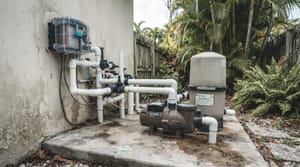
Your pump starts making a grinding noise in July, right when it's running twelve hours a day. The repair tech quotes you $380 for a new motor and bearings. A new variable-speed pump runs $1,400 installed. You have about ten minutes to decide before your water starts to turn, and nobody tells you how to think about that choice. We've serviced pools across Miami-Dade since 2007, and this question comes up on almost every older system we touch.
We use one rule on our own service calls. Repair makes sense when the equipment is young, the fix is cheap relative to a replacement, and the unit isn't dragging your power bill up every month it stays alive. Replacement wins when the part that failed is the expensive part, the unit is past its expected life, or you've called for the same problem more than once this year.
Start with the equipment's age
Every piece of pool equipment has a working life, and in South Florida that life runs shorter than the national average. The pump runs ten to twelve months a year here instead of five or six up north, so the hours pile up fast.
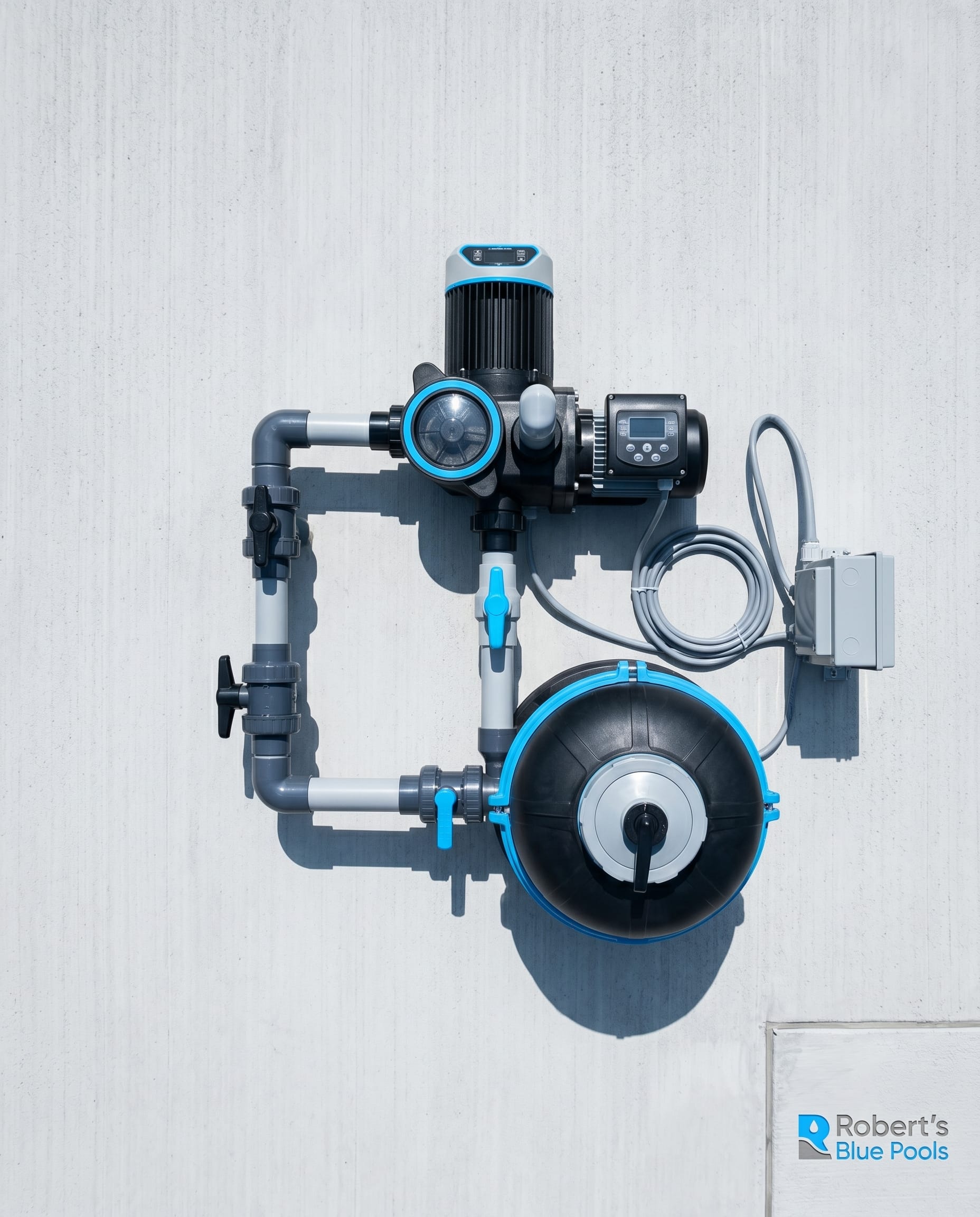
A variable-speed pump installed and maintained well lasts twelve to fifteen years. An older single-speed pump lasts eight to ten. Gas heaters run eight to twelve years. Heat pumps stretch to ten or fifteen when they're sized right for the pool. Sand filter tanks go seven to ten years, with the sand inside replaced every three to five. Cartridge and DE filters fall in a similar range, and the housings often outlast the elements inside them.
If your equipment is in the first half of that range, lean toward repair. Past it, every repair is money spent on a unit that's going to need replacing soon anyway.
Run the cost against a new unit
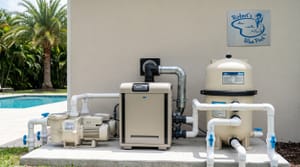
For heaters, we use a simple threshold. If the unit is under eight years old and the repair costs less than half the price of a new heater, fix it. If the heat exchanger has failed, the unit is over ten, or you've had repeat service calls in the last year, replace it. The heat exchanger is the most expensive component in the heater, so when that goes, you're paying most of a new unit's cost to keep an old one running.
The same math works for pumps and filters. A $90 capacitor or a $40 set of filter cartridges on a six-year-old unit is an easy repair. A failed motor or a cracked filter tank on a twelve-year-old setup is a different conversation.
The pump is where the FPL math changes everything
Pumps deserve their own rule because of what they cost to run, not just to fix. The pump is the single biggest electricity user in most Miami pools, and FPL's 2026 all-in residential rate sits around 14.5 cents per kilowatt-hour, with a typical household bill near $136 a month. An oversized single-speed pump burning power ten months a year adds up.
There's also a regulation driving this. The Department of Energy's Dedicated-Purpose Pool Pump rule took effect July 19, 2021, setting efficiency standards measured by Weighted Energy Factor. Most single-speed pumps above 0.711 total horsepower no longer meet the standard for new sales, so when an old single-speed dies, a variable-speed unit is usually the replacement. That's not a loss. A variable-speed pump cuts pump energy use 50 to 70 percent, and the DOE estimates a compliant pump improves yearly operating costs by about $550 (Pentair).
So even when a repair on an old single-speed pump is cheap, we often tell homeowners to replace it. The repair saves you $300 today and costs you several hundred a year in wasted power. If your pump is oversized for the pool, the savings are larger still. We walk through that calculation in our guide on pool pump sizing.
Salt cells and the wear-part exception
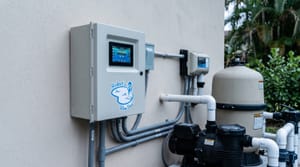
Salt chlorine generators have a part that's meant to wear out. The cell itself is a consumable. Pentair rates a cell at around 10,000 hours of run time, which works out to three to five years in a South Florida pool, sometimes longer with careful maintenance. A replacement Pentair or Hayward cell runs roughly $400 to $700.
When the cell dies, that's not an equipment failure, it's a scheduled replacement. The control board and the rest of the system usually keep going. Don't let anyone sell you a whole new salt system because the cell stopped producing chlorine. We cover how these systems hold up in the heat in our salt systems vs. chlorine breakdown.
What South Florida does to the numbers
Three local conditions shorten equipment life here. Salt air near the coast in places like Key Biscayne and Bal Harbour corrodes metal fittings and heat exchangers faster. Hard limestone-aquifer fill water scales up heaters and salt cells, dropping their efficiency before they fail outright. And the year-round run time means more hours on every bearing, seal, and board.
That's why the same pump that lasts fifteen years in Atlanta might give you eleven here. Build that into your thinking. A repair that buys two years of life on an already-aging unit is worth less in our climate than the brochure suggests.
When to call before you decide
If your equipment is throwing a single fixable fault and it's young, repair it and move on. If you're staring at a failed heat exchanger, a dead single-speed pump, or a third service call on the same unit this year, replacement is the cheaper path over the next five years. A technician who knows Miami-Dade equipment can tell you which situation you're in after one look, and that diagnosis is the part most homeowners skip. Our pool repair team does this every day.
Not sure whether your pool equipment is worth fixing or worth replacing? Call Robert's Blue Pools at (305) 762-7665 and we'll tell you straight.