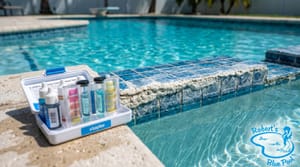

The autofill ran all summer. Somebody dropped tabs in the floater every few weeks. From the kitchen window the water still looks blue. Then you pull a sample three days before your parents land at MIA and the free chlorine reads 0.4 ppm against a cyanuric acid level of 130. The pool that looked fine on Tuesday goes green on Saturday with six people in it.
Miami-Dade starts filling back up the first week of October. Seasonal residents trickle in through the holidays, and the heaviest arrivals land in January and February. More than 810,000 seasonal travelers come to Florida every year, enough to swell the state's population by as much as 5 percent over the winter. The reopenings that go smoothly start about three weeks before anyone swims, not three days.
Test the Water Before You Treat It
Five months of trichlor tabs leave something behind. Every tablet that dissolves adds stabilizer, and stabilizer does not evaporate or burn off. It builds. The ANSI/APSP-11 standard published by the Pool & Hot Tub Alliance puts the ideal cyanuric acid range at 30 to 50 ppm and caps it at 100. Past that ceiling your chlorine is still in the water and still shows up on a test strip, but it works slower against the organics a houseful of guests brings in.
Pull a full panel, not a two-way strip. You want free chlorine between 2 and 4 ppm, calcium hardness between 200 and 400 ppm on a plaster pool, and a cyanuric acid number you trust. If CYA reads above 100, no chemical fixes it. You drain and replace water, which takes days in a 15,000-gallon pool and has to happen before the stain work, not after.
October does not give you a break on demand either. The National Weather Service office in Miami puts the October rainfall normal at 7.7 inches, with an average high of 86 and an average low of 74. Rain keeps diluting your chlorine and pushing pH around while the water stays warm enough to grow algae through Thanksgiving.
The Waterline Tells You How Long the Pool Sat
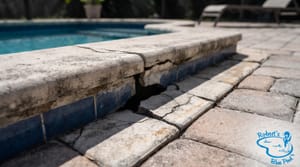
Run a finger along the tile at the water level. A summer of low circulation leaves a band there, and the band tells you which problem you have. Rub a chlorine tab against a patch of it. If the stain lifts, it is organic, and a brush plus a shock cycle clears it. If the color stays, you are looking at metal, and metal needs ascorbic acid and a sequestrant rather than more chlorine.
Check the water level history while you are down there. An autofill valve hides a leak by doing its job, and the meter keeps running. We ran the numbers on that in what a slow pool leak really costs Miami homeowners. Shut the autofill off for 24 hours and mark the tile with tape before you decide the surface is the only issue.
Idle Equipment Breaks Where You Cannot See It
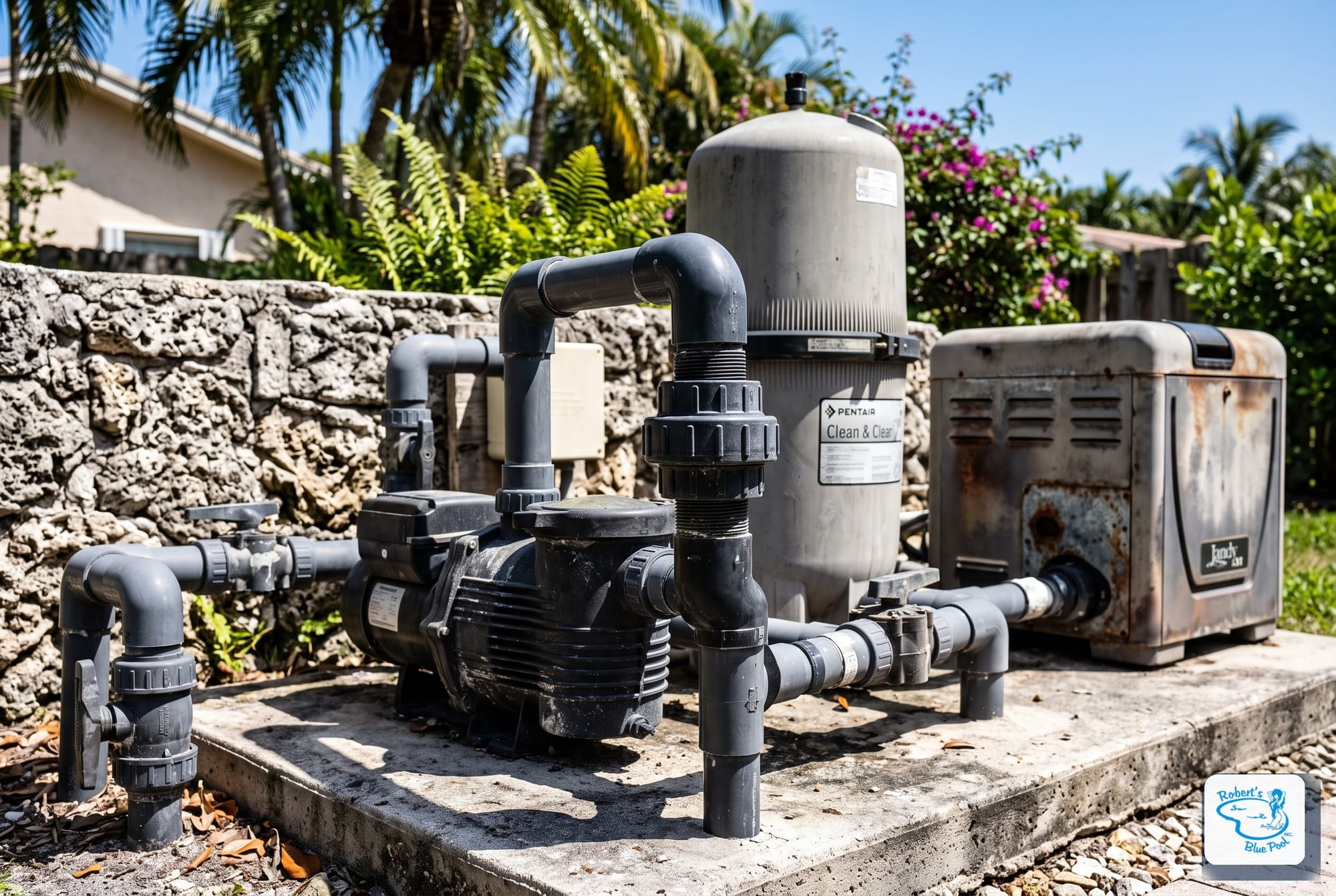
A pump that ran two hours a day all summer is not a rested pump. It is a pump with a shaft seal that dried between cycles. Start it and watch the seal plate for ten minutes. Water weeping onto the pad means the seal goes now, before your guests arrive, and not on a Sunday in November.
Read the filter gauge against its clean baseline. Pentair and Hayward both put the cleaning point at 8 to 10 psi above that baseline, and a Pentair Clean & Clear cartridge system runs 8 to 13 psi clean. So a gauge sitting at 22 psi is telling you the cartridge is packed, whatever the water looks like. Pull the element and inspect the pleats instead of hosing it off in place.
Gas heaters need the same attention and get less of it. A heater that has not fired since March collects wasps and lizards in the burner tray, and the first cold front in November is a bad time to find out. Salt cells scale over a hot summer of high output. Pull the cell, look at the plates, and acid wash it if you see white crust. Our weekly pool maintenance plans in Miami-Dade County exist for exactly this gap between owners.
Florida's Barrier Law Counts Guests You Did Not Plan For
Snowbird households arrive with grandchildren. Florida Statute 515.27 requires a residential pool to carry at least one safety feature: a barrier meeting section 515.29, an approved safety pool cover, exit alarms on every door and window with direct pool access rated at a minimum 85 dB A at 10 feet, a self-closing and self-latching device with its release mechanism no lower than 54 inches above the floor, or a pool alarm that sounds on unauthorized entry into the water.
Section 515.29 sets the barrier at four feet minimum measured from the outside, with no gap, indentation, or protrusion a young child can crawl under, squeeze through, or climb over. The statute names medically frail elderly persons alongside children, which matters in a house that gets three generations at once. Test the door alarms and the latch tension now. A battery that died in July fails silent. We cover the full requirement set in pool safety barriers and Florida law.
A Three-Week Reopening Schedule
Week one: numbers and water
Full chemical panel. Drain and refill if cyanuric acid sits above 100. Tear down the filter and inspect the cartridge or the grids. Shut the autofill for a day and read the tile.
Week two: surfaces and equipment
Treat the waterline once the fresh water has mixed. Service the pump seal, fire the heater, pull and inspect the salt cell. Book any repair part now, because October is when every pool company in Miami-Dade is ordering the same seal kits.
Week three: hold it steady
Run the pump on its full schedule and test every other day until the numbers stop moving. Reset automation to occupied-house hours. Check barriers, alarms, and latches. Clean the deck and the furniture last, once nobody is dragging a hose across it.
Robert's Blue Pools has run this reopening sequence across Coral Gables, Key Biscayne, and Bal Harbour every fall since 2007. The pools that give owners trouble in December are the ones somebody opened on a Thursday for a Friday arrival. The other side of this cycle, the checklist for locking a pool down before you head north in spring, sits in leaving Miami for the summer.
Book a reopening inspection with Robert's Blue Pools before your season starts, or call (305) 762-7665 and we will get a technician out this week.