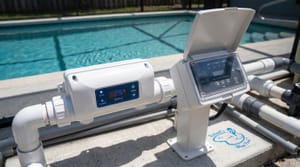
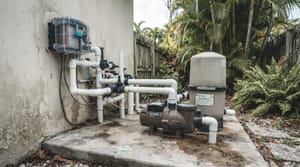
Your salt system reads 3,200 ppm, the pump runs eight hours, and by Thursday the water looks dull again. It did the same thing last July. A salt cell that carried your pool all winter starts falling behind the day the water crosses 88 degrees, and in Miami-Dade that day comes early and stays late.
Heat is the reason, not a broken cell
Salt does not make chlorine. Your cell does, by running current through the salt already in the water. Heat, sun, and swimmers pull that chlorine back out faster than a mild month ever asks for. On a 92-degree afternoon in Kendall or Cutler Bay, free chlorine can fall close to 90 percent between morning and dusk. Once the water passes 85 degrees the chlorine burns off faster, and past 90 the demand climbs again.
Warm water helps the cell in one way. It conducts current better, so the plates produce chlorine more efficiently. The faster burn-off cancels that gain. Orenda Technologies measures the net effect in hot water as a system working harder to hold the same reading. Stabilizer decides how much of that work survives the sun. Keep cyanuric acid between 30 and 50 ppm, or July UV strips the chlorine as fast as the cell makes it.
Check four things before you blame the cell
A cell that reads a real fault is rare. A cell starved of salt, flow, or run time is common. Robert's Blue Pools works through these in order before pricing a replacement, and you can too.
Salt level and output settings
Test the salt first. Most systems want 3,000 to 3,500 ppm, and Miami summers move that number both ways. Evaporation concentrates the salt, then an afternoon downpour dilutes it. If salt sits in range, raise the output. Sixty to seventy percent for ten hours holds most backyard pools through peak heat, where fifty percent carried them back in March.
Water flow
The cell only makes chlorine when water moves through it. A packed skimmer basket, a clogged pump strainer, or a dirty filter cuts that flow, and the cell reads low or shuts off. Empty the baskets, check the filter pressure, and clear the flow path before you touch the output dial again.
Scale on the plates
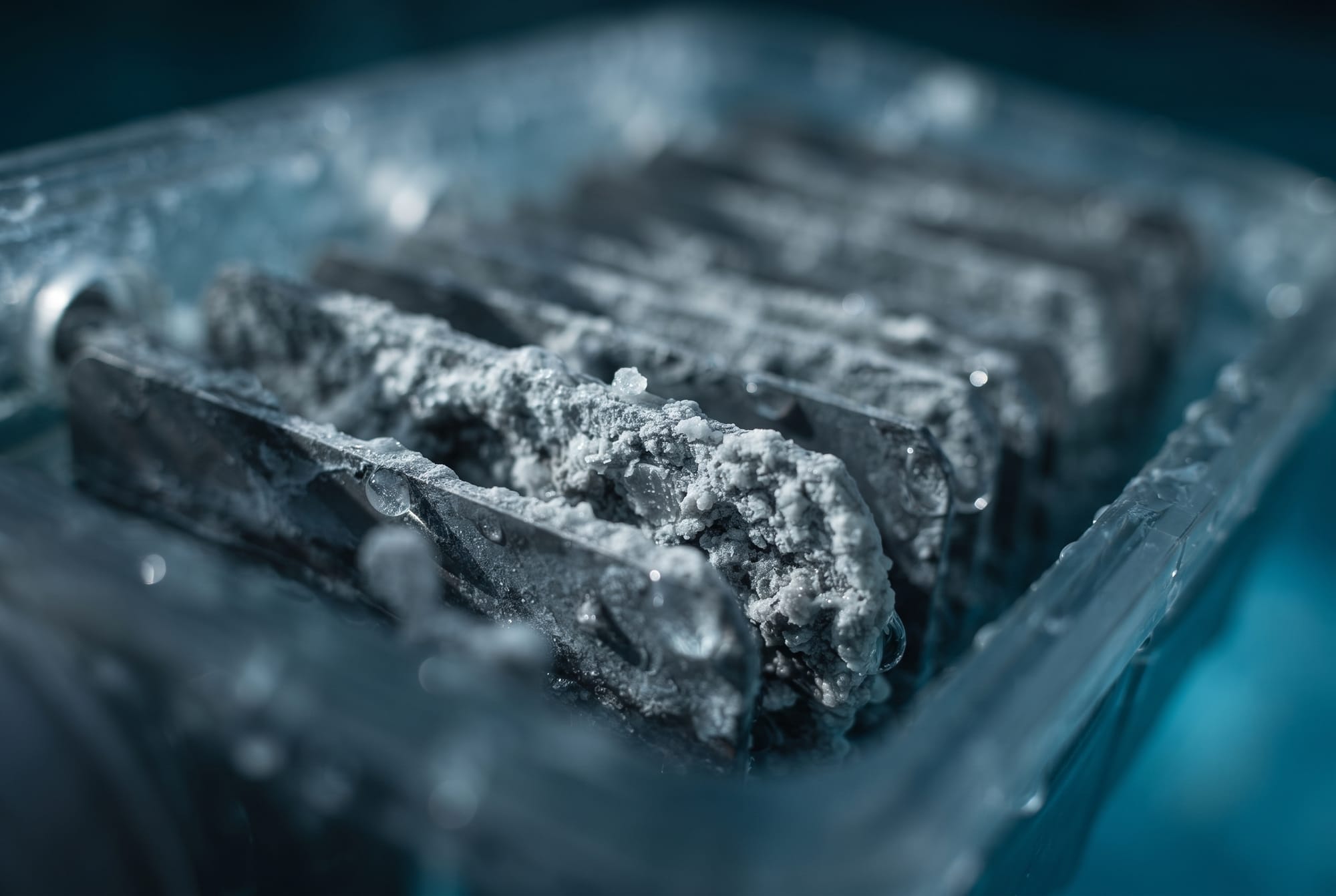
Miami fill water comes off a limestone aquifer, so it runs hard. That calcium plates out on the cell as white crust and blocks the electrolysis. Our post on why hard water costs Miami pool owners more covers why scale forms faster here than almost anywhere. A scaled cell reads low no matter how high you set it.
Clean the cell without wrecking it
Pentair tells IntelliChlor owners to inspect the cell every three to six months, or sooner when output drops or an error light shows. Pull the cell, shine a flashlight through the plates, and look for white or gray scale. If you see it, soak the cell in one part muriatic acid to ten parts water for five to ten minutes, then rinse with fresh water. Never scrape the plates with a screwdriver or wire. That coating is a thin precious-metal layer, and once you gouge it the cell is done. Don't overdo the acid baths either. Every soak strips a little coating, so clean when you see scale, not on a calendar. The IntelliChlor status mode also shows total run hours, so you can read how much life the cell has spent.
What a cell lasts in Miami, and what it costs
A salt cell runs 3 to 7 years, or around 10,000 hours of chlorine production by Pentair's rating. Two Miami conditions push you toward the short end. Hard water scales the plates, and a pump that runs ten to twelve months a year logs hours fast. Treat the cell as a wear part, the same way you budget for a car battery. Our guide on when to repair or replace pool equipment puts the salt cell in that same planned-replacement category.
You can stretch those years. Manufacturers build cells to run at half to two-thirds output in hot climates, so a cell rated one size above your pool spends fewer hours at full tilt and lasts longer. Robert's Blue Pools sizes replacements that way for Miami-Dade pools instead of matching the cell to the gallon count on paper.
Replacement runs $500 to $1,600 depending on size and brand. The cell is cheap to operate in the meantime. It draws 50 to 150 watts and adds maybe $40 to $80 a year at FPL's 2026 residential rate, where a typical 1,000-kWh bill sits at $136.64. Your pump costs you far more than the cell ever will.
If your salt cell is losing the fight with July heat and the free fixes aren't holding, Robert's Blue Pools will test the cell, clean it, and tell you if it's spent before you spend on a new one. Call (305) 762-7665 or set up a weekly maintenance plan.