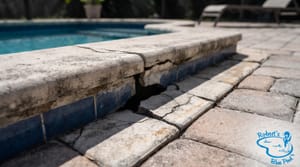
Your pool's tile and coping are cracking because the deck around your pool is expanding and contracting every single day. Miami's summer heat doesn't just feel intense—it drives concrete surfaces above 140°F in direct sun. That temperature swing stresses the joint between your coping and deck with forces that rigid sealant can't handle.
Why the Expansion Joint Fails
Between your pool's concrete bond beam and the surrounding deck sits a joint filled with backer rod (foam) and covered with flexible sealant. That sealant absorbs the movement caused by temperature swings—typically ±25% of the joint width per cycle. When the sealant hardens or cracks, it stops absorbing movement. The deck tries to expand anyway, and that force pushes directly into the coping and tile.
The weakest point is right where the coping meets the pool shell. That's where you'll see cracks first, then loose tile, then water working its way behind the coping into the deck structure.
Material Choice Matters More Than You Think
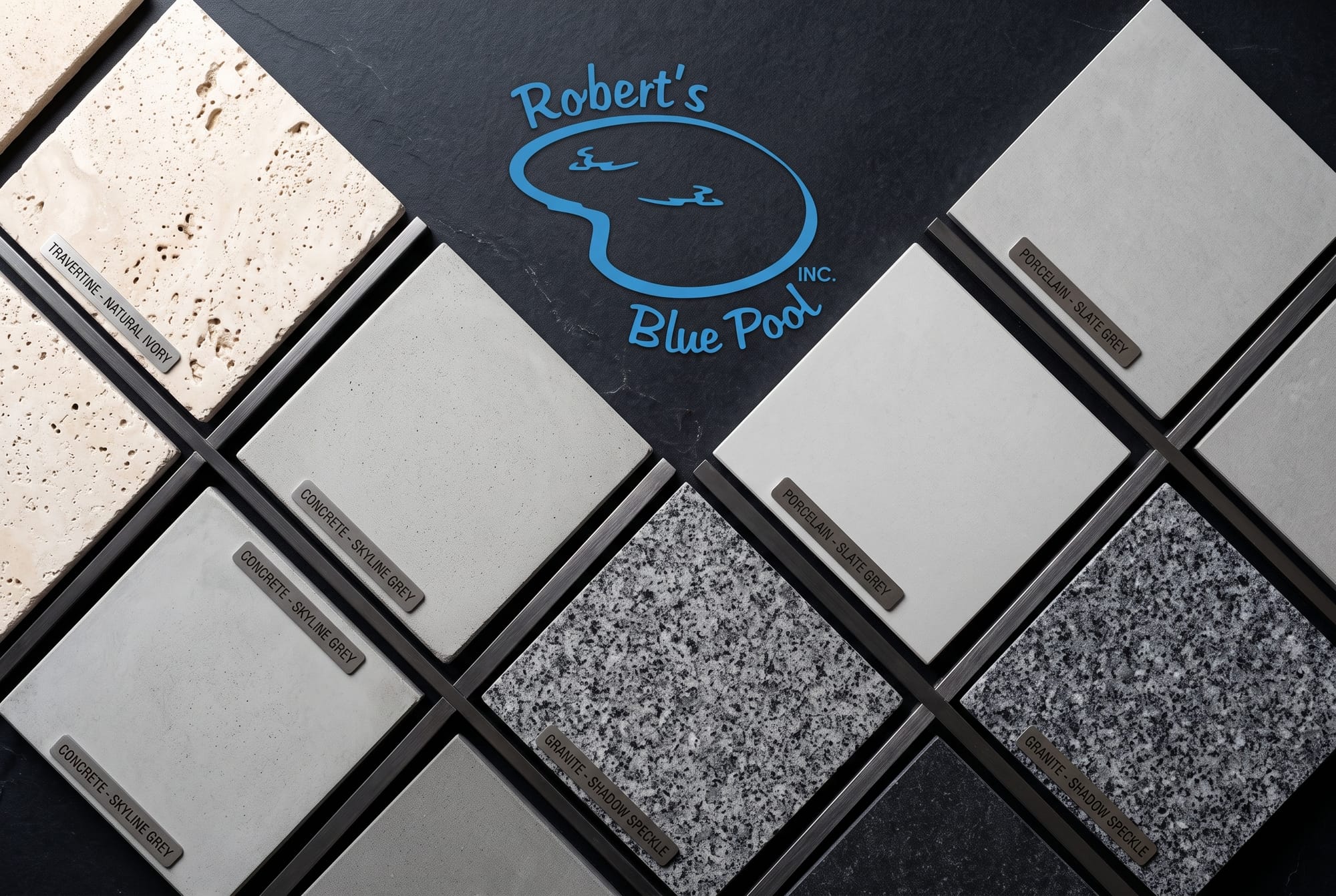
Not all coping and tile materials handle Miami heat equally. Poured or stamped concrete coping absorbs and holds heat, reaching 130–140°F on a 95°F afternoon. Travertine pavers stay 15–20°F cooler underfoot because of their porous structure and light color. That thermal difference means less expansion stress on travertine than concrete—fewer cycles of maximum stress means fewer cracked joints.
Granite and porcelain coping are the most durable options. Porcelain is fired at extreme temperatures, making it non-porous and UV-stable—it won't fade and resists cracking far better than natural stone. Granite weathers well but costs more upfront.
Concrete coping can last 20+ years with maintenance, but it's the material most vulnerable to thermal stress and salt-spray deterioration if you live on Biscayne Bay or near coastal areas. Travertine and limestone are popular in Miami for aesthetics and thermal performance, but soft limestone is porous—salt crystals from spray or salt pools work into the pores and cause surface breakdown over years.
Grout and Sealant Deterioration Accelerates in Salt Air
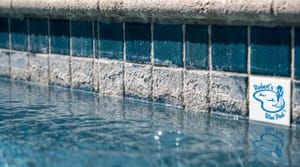
If you have tile on your coping or waterline, the grout between tiles is just as vulnerable as the expansion joint. Cement-based grout is full of tiny pores. Saltwater—whether from a salt-chlorine system or just salt-laden coastal air—soaks in. When water evaporates, salt crystals grow inside the grout. Those crystals crack and weaken the grout from within.
In Miami-Dade, hard municipal water, year-round UV exposure, and coastal salt spray combine to age tile and grout faster than most U.S. markets. If you live in a zone that gets salt spray—including Bal Harbour, Fisher Island, or anywhere from Biscayne through Sunny Isles—this deterioration is even faster.
For saltwater pools, use silicone-based grout rated for chloride exposure, not standard cement grout. Regular cement grout will crumble within a few years.
Prevention: Seal Before It Fails
The expansion joint sealant should be resealed on a schedule—every 3–5 years in Miami—before it hardens and cracks. Once sealant goes rigid, it stops absorbing thermal movement. You're not fixing it early to prevent a small crack; you're preventing a small crack from becoming a structural problem that pulls the coping loose and lets water into the deck structure.
If you hire a contractor for joint resealing, make sure they:
- Remove the old, hardened sealant completely. Don't caulk over it.
- Use backer rod (closed-cell foam) if the joint is wider than 1/4 inch. The rod sits in the joint so the new sealant bonds on two sides, not three. This lets it flex without pulling from the wall.
- Apply polyurethane or polysulfide sealant rated for pool use. Deck-O-Seal and Sikaflex are both rated to flex ±25% of joint movement and resist pool chemicals.
For saltwater pools specifically, confirm that your contractor is using a sealant rated for salt-water and salt-air environments.
When to Consider Replacement
If the coping is already loose, the tile is cracked in multiple places, or water is seeping behind the coping into the deck, resealing won't fix it. You'll need to remove the damaged coping, repair the deck structure if needed, and reinstall new coping with proper joint specification.
This is also the right time to upgrade materials. If your concrete coping has cracked twice in 10 years, travertine or porcelain will serve you better. The higher upfront cost is worth it when you factor in 20–30 year lifespan instead of needing repairs every decade.
Florida Building Code (FBC Chapter 45) requires that your deck slope away from the pool at least 2% to shed water and prevent standing water that accelerates decay. If your contractor is replacing coping and deck, they'll confirm the slope meets code.
Robert's Blue Pools inspects expansion joints and tile at every service visit. Call (305) 762-7665 for a free evaluation of your coping and tile condition.