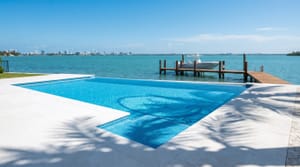
On Fisher Island, your pool tech arrives by ferry. The 216-acre island sits north of the Port of Miami with no bridge, so every crew, every replacement pump, and every bag of salt crosses Government Cut on the 7.5-minute boat that only residents and authorized service providers can board. That one detail changes how you plan pool care. Miss a service window and the next opening runs a day out, not an hour.
A few miles north, Bay Harbor Islands runs on the same coastal math without the ferry. The town's two islands sit in Biscayne Bay, and the single-family homes on West Island ring a waterfront of private docks and canals. Bay-front and canal-front lots on both islands catch salt spray all year. Robert's Blue Pools has serviced Miami-Dade's barrier islands since 2007, and the pattern holds across every one of them. The water looks perfect. The salt never quits.
Salt Air Corrodes Everything on Your Equipment Pad
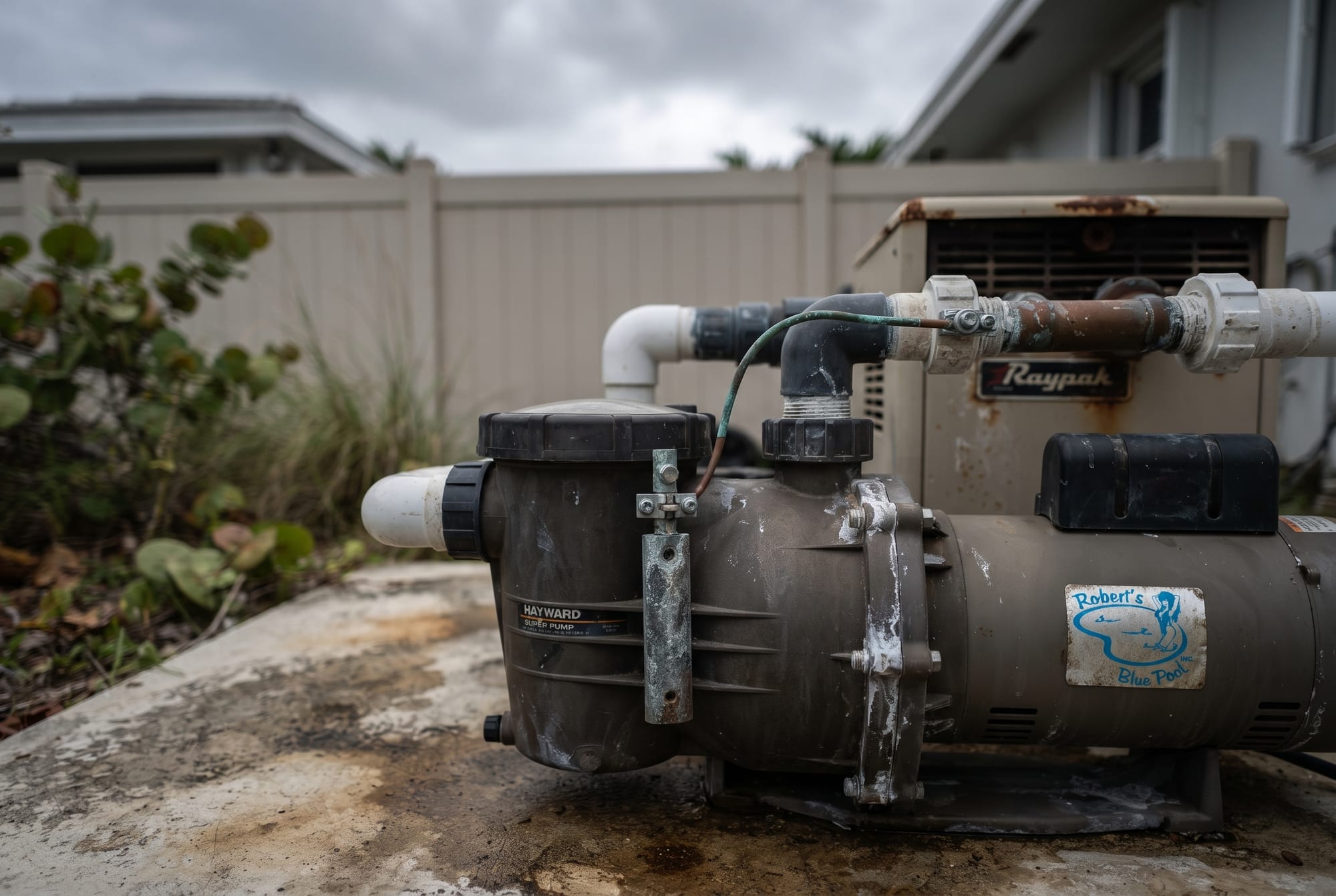
Fine airborne salt settles on motor housings, bolts, and electrical terminals. It pulls moisture out of the air, and moisture plus chloride pits metal. Your pump motor fails sooner. Your heater's internals scale and corrode. On an oceanfront Fisher Island terrace or a canal-front Bay Harbor lot, this runs faster than it does two miles inland.
Stainless steel does not save you. Chloride ions attack the passive oxide layer on stainless, and pitting corrosion works beneath the surface until a rail, ladder, or fastener fails with no warning. Grade-304 stainless is the common builder spec. Marine-grade 316 holds up better in salt-spray zones, and it is what you want for rails and fasteners on a coastal pool.
The Fixes That Extend Equipment Life on the Coast
The engineered defense against salt-driven corrosion is a sacrificial zinc anode tied into your pool's bonding system. The anode corrodes in place of your heater, lights, and rails. It also satisfies NEC 680.26(C), which requires pool water to contact a corrosion-resistant conductive surface exposing at least 9 square inches at all times. A CMP Pool Defender anode lasts about three years before it needs replacement, so put that swap on the calendar.
For heaters, specify a cupro-nickel heat exchanger. Hayward builds them into its H-Series and HDF units, and Pentair uses one in the MasterTemp. Both resist corrosion better than standard copper in coastal and saltwater setups. Between service visits, rinse the equipment pad with fresh water. A hose-down clears most of the settled salt before it eats into housings and terminals.
Waterline Wear and Resurfacing Run Faster by the Bay
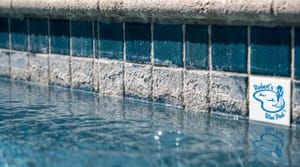
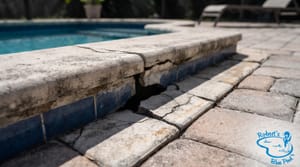
Coastal pools age at the waterline too. Salt, sun, and Miami's hard water leave scale and etching on plaster and tile faster than inland pools see. Watch the waterline for a chalky band, and check the steps for rough spots underfoot. When the finish starts to go, resurfacing on schedule protects the shell underneath, and it keeps small wear from turning into a full renovation. Our guide on how often to resurface your pool in South Florida breaks down the timeline for coastal water.
Island Access Changes How You Schedule Service
On Fisher Island, service is gated. Crews and vehicles clear the ferry terminal, so a same-day emergency call depends on ferry timing and island authorization, not just drive time. A standing weekly plan matters more here than almost anywhere, because it keeps a known, cleared crew on your pool on a fixed schedule. Our Fisher Island pool service crews are set up for the ferry rules and island access, and a weekly maintenance plan keeps the salt in check between deeper visits.
Bay Harbor Islands is easier to reach over the Broad Causeway, but the salt exposure reads the same. The canal-front homes still need the zinc anode, the 316 stainless, and the fresh-water rinses. Robert's Blue Pools works pools across the Biscayne Bay islands, and the coastal playbook carries from one island to the next.
Own a pool on Fisher Island, Bay Harbor, or anywhere along Biscayne Bay? Book a coastal inspection with Robert's Blue Pools or call (305) 762-7665, and we'll check your anode, bonding, and waterline before the salt does the deciding for you.