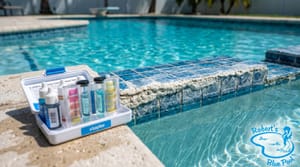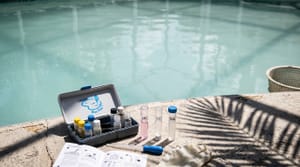
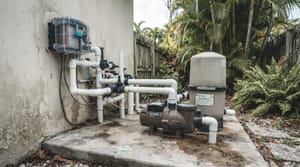
A homeowner in Palmetto Bay called us in July because his pool had clouded over for the third time that summer. His salt system read "Generating." The salt level on the display looked fine. When we pulled the cell, the titanium plates carried a rind of white scale thick enough to scrape with a thumbnail. The unit had been running for months and producing almost nothing.
Salt pools carry a reputation for looking after themselves. That reputation sells systems. It also leaves Miami-Dade owners staring at green water and a four-figure repair they never saw coming. Robert's Blue Pools has serviced salt pools across this county since 2007, and five beliefs cause most of the damage.
Myth 1: A Saltwater Pool Is a Chlorine-Free Pool
Your salt cell makes chlorine. That is the entire job. Current passes through salted water inside the cell, splits sodium chloride, and yields hypochlorous acid, the same sanitizer that comes out of a jug of liquid chlorine. The difference sits in the delivery method, not the chemistry. We covered the performance side of that trade in our comparison of salt systems and chlorine in South Florida heat.
The CDC treats salt pools no differently from any other. Its home pool guidance calls for free chlorine of at least 1 ppm with pH between 7.0 and 7.8, and at least 2 ppm once cyanuric acid is in the water. A generator does not exempt you from that number. Test free chlorine with a kit rather than reading the control panel. The panel reports what the cell attempted. Only a test tells you what the water holds.
Myth 2: The Salt Cell Takes Care of Itself
Hayward builds a 500-hour inspection reminder into the AquaRite. That lands near every three months of run time, and Pentair gives the same three-month interval for the IntelliChlor. Both numbers assume balanced water.
What Miami-Dade Tap Water Does to a Salt Cell
Miami-Dade Water and Sewer draws from the Biscayne Aquifer, which sits inside limestone, and limestone is calcium carbonate. Hardness at the tap runs between 150 and 200 mg/L, which the industry files under very hard. Electrolysis pushes pH up right at the plate surface, calcium drops out of solution there first, and every top-off delivers more of it. We walked through what that costs across the whole pool in our post on calcium hardness in Miami pools. A cell in Coral Gables scales faster than the manual predicts.
Look at yours every six weeks between June and October. Rinse the plates with a hose first. Hayward calls for a 4:1 water-to-acid soak of roughly 15 minutes only when rinsing leaves deposits behind, and Pentair caps its soak at 30 minutes. Both manufacturers tell you to add acid to water and never the reverse. Pentair also states in its acid cleaning kit instructions that a cell damaged by improper acid washing falls outside warranty coverage, which turns one careless afternoon into a full replacement.
Myth 3: You Add Salt Once and You Are Done
Salt does not evaporate. It leaves every other way. A run of afternoon storms over Kendall dilutes your salinity. Backwashing carries salt out with the waste. A busy weekend splashes more of it onto the deck. Then the water evaporates off a 90-degree surface and concentrates whatever stayed behind.
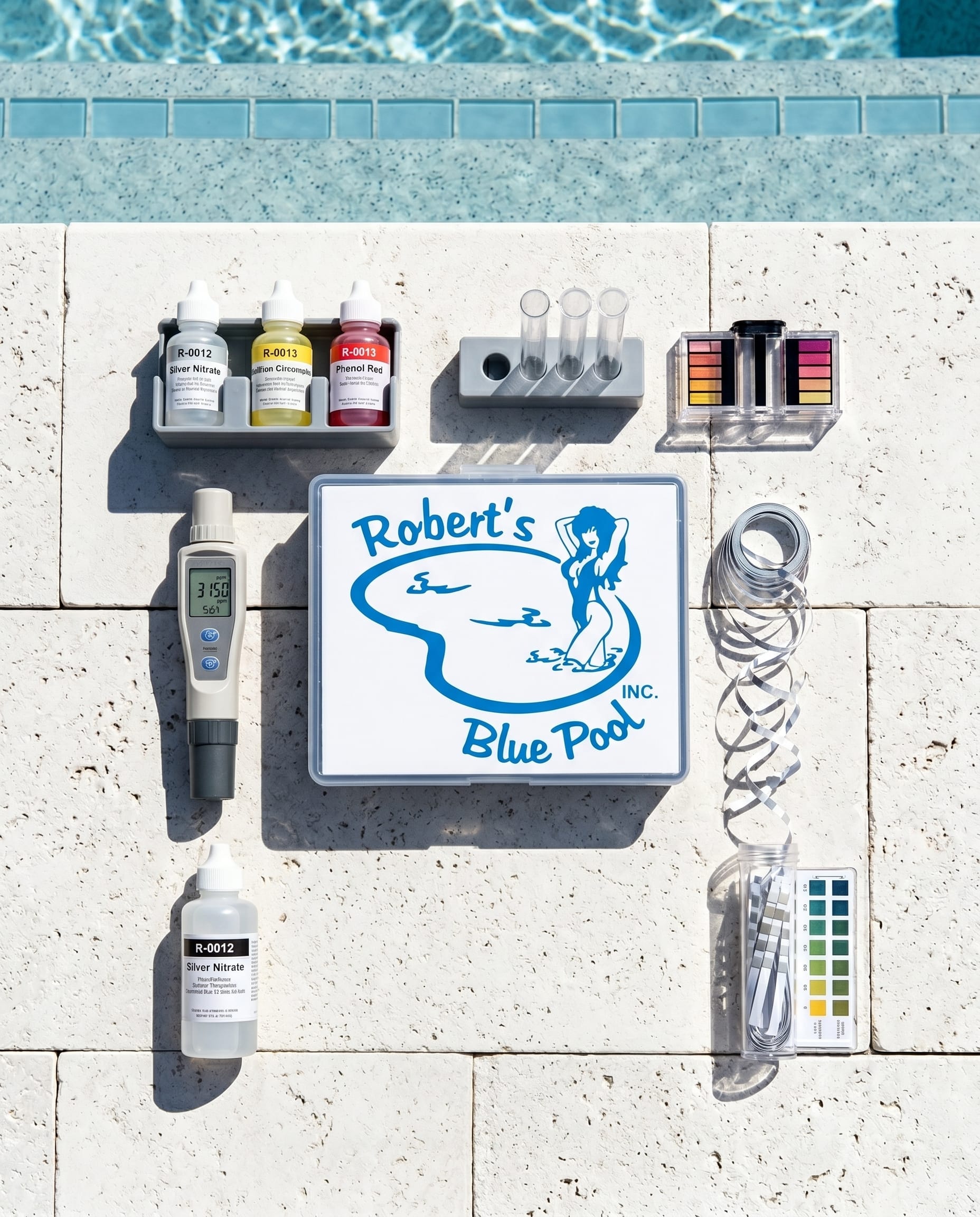
Hayward runs the AquaRite best between 2,700 and 3,400 ppm and targets 3,200. Drop under the floor and the cell throttles its output, then shuts down to protect the plates. Climb over the ceiling and it throws a high-salt fault and stops. From the deck both failures look identical: no chlorine. Test salinity with a strip or a meter once a month instead of trusting the readout, which drifts as the cell ages. Our fix list for a salt cell that stalls in July walks through the order to check things in.
Myth 4: Salt Is Gentle on Pool Equipment
Put copper, stainless steel and titanium into salted water and you have built a battery. The least noble metal gives up ions to the water. On a Miami pool that surfaces as pitted heater headers, black staining on plaster, and handrails that chalk at the waterline. Owners in Key Biscayne and Bal Harbour also carry salt spray on the outside of the equipment pad, so the corrosion runs at the machine from two directions.
A sacrificial zinc anode handles most of the in-water half. Jandy and other manufacturers sell inline versions that thread into the plumbing after the filter and ahead of the heater. The zinc corrodes so your equipment does not. Swap it every two to three years, or once about half the zinc has dissolved. Clear housings let you check it without cutting into anything.
Myth 5: Salt Pools Cost Less to Maintain
You stop buying tablets. You start buying cells. A genuine Hayward T-Cell-15 lasts three to seven years, or somewhere near 10,000 operating hours. South Florida pumps run ten to twelve months a year, so you reach that hour count well ahead of an owner in Atlanta running six. Set money aside for the replacement rather than meeting it as a surprise in the middle of August.
Salt still wins on comfort and on day-to-day handling for plenty of Miami pools. It earns that only when you run it as equipment. Six-week cell checks, monthly salinity tests, weekly free chlorine readings, and an anode you actually replace. Skip those and a salt pool costs more than the tablet pool it replaced.
If your salt system has been reading "Generating" while the water tells a different story, call Robert's Blue Pools at (305) 762-7665 and we will pull the cell, test the water and tell you which of the five it is.