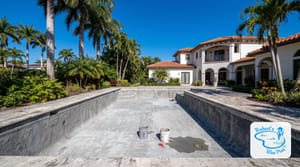
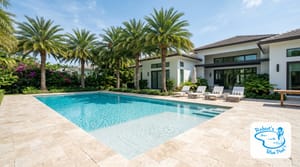
Two neighbors in Pinecrest finish their pools the same spring. Same builder, same white plaster. By year six one owner is scrubbing rough patches off the steps. The other still has a smooth, even surface. Nobody cheated on maintenance. The difference is what each pool's water did to the plaster in between.
That is the honest answer to how often you resurface a pool in South Florida. The calendar gives a range. The water decides where in that range you land.
Plaster Lasts 5 to 10 Years, and Miami Pushes You Toward the Short End
SGM, a finish manufacturer, puts traditional plaster at 5 to 10 years, with early wear showing at 3 to 5. Colored plaster runs 7 to 12. Quartz runs 12 to 18, and pebble 15 to 20. PebbleTec goes further and says a properly maintained pebble finish lasts over 20 years, often three decades.
Those numbers come with a condition both manufacturers repeat. PebbleTec ties the 20 years to balanced pH, alkalinity and calcium hardness. SGM calls pH control the single most important factor in finish life. A finish rated for 20 years in a well-managed pool is not rated for 20 years in yours by default.
The Chemistry Behind a Failing Finish
Plaster is cement. Water that is too aggressive pulls calcium out of it, and the surface etches and pits. Water that is too saturated drops calcium back as scale, and the surface turns rough and crusty. Either one ends the finish early.
The Pool & Hot Tub Alliance publishes the ranges in ANSI/APSP/ICC-11 2019: pH 7.2 to 7.8, carbonate alkalinity 60 to 180 ppm, calcium hardness 150 to 1,000 ppm. Those are the limits. For plaster, the calcium range owners aim for is tighter, 250 to 350 ppm. Below about 200 ppm the water turns aggressive toward the surface. Above about 400 ppm it trends toward scale.
PHTA also notes that the Langelier Saturation Index is a guideline, not a guarantee, and that the individual parameter ranges are the mandatory part. A good LSI with a pH of 7.0 is still a problem.
Why Biscayne Aquifer Water Shortens the Schedule
Miami-Dade tap water comes from the Biscayne Aquifer, which runs through limestone. The water arrives already carrying calcium, at about 150 to 200 mg/L. Then the sun does its work. Year-round evaporation leaves the calcium behind while the water level falls, and each top-off adds more. Hot water also shifts the balance toward scaling.
That is why a pool that looked fine in March can have a gritty waterline by October. Our calcium hardness guide covers the dilution fix. A partial drain and refill can bring a high number down, but draining a pool in Miami-Dade's high water table is a job for a professional, not a weekend task.
Test calcium, pH and alkalinity every month, and keep the results. Two years of readings tell you more about your surface than its age does. Write down the date of every refill and every acid or calcium addition beside the numbers, so the next person to look at the pool can follow what happened.
Five Signs the Finish Is Done
Chemistry can slow a failing finish. It cannot rebuild one. Resurface when you see:
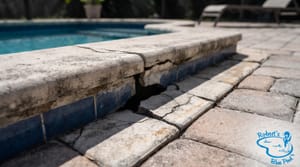
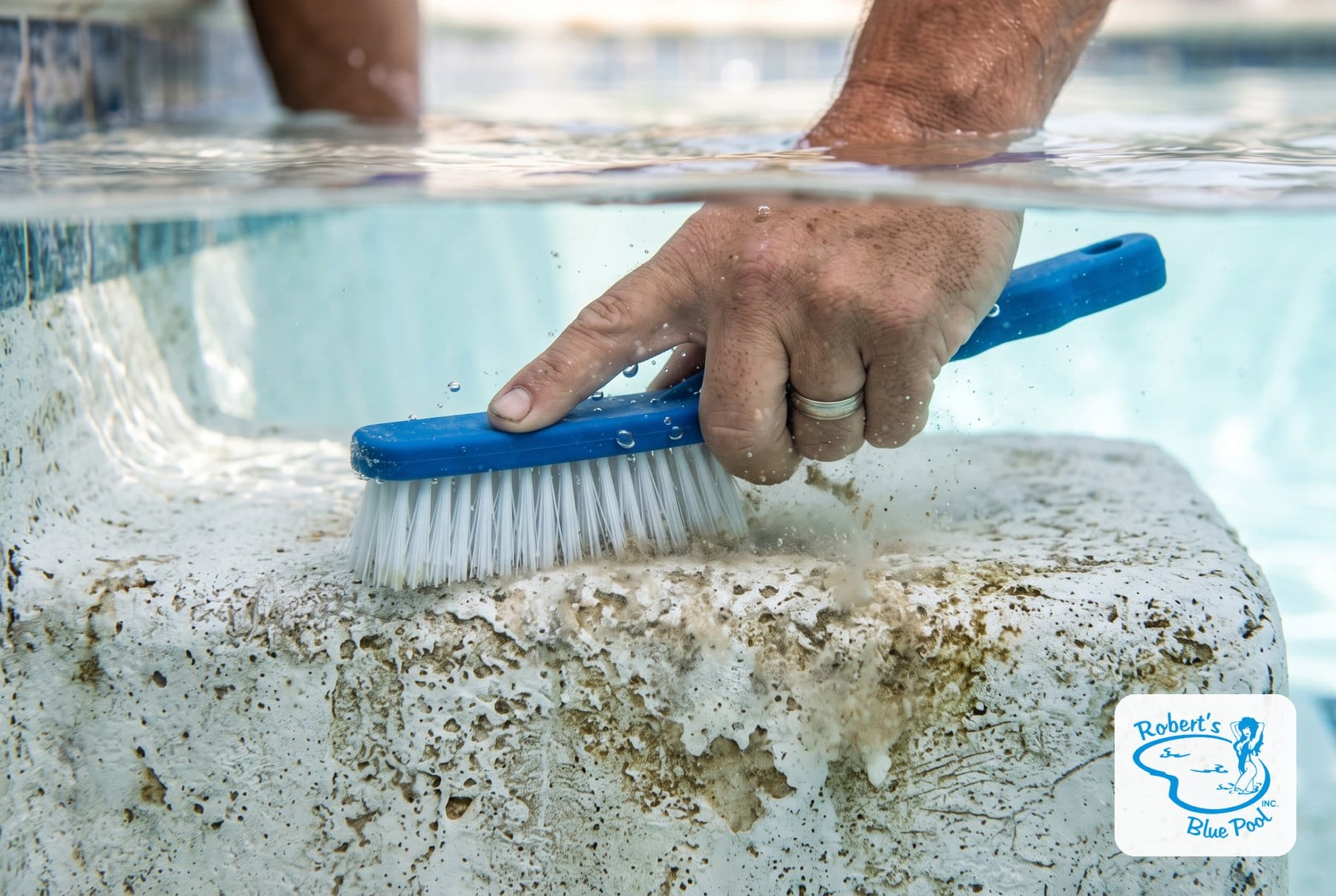
- A rough, sandpaper feel on steps and benches, where the binder has eroded and exposed the aggregate.
- Widespread stains that do not respond to chemical treatment.
- Visible etching or pitting across the floor and walls.
- Cracks that show structural movement rather than hairline crazing.
- Algae that returns even though the chemistry tests clean, a sign the surface itself is the problem.
A leak or an active crack is a different problem from a worn finish. Our guide to the signs your pool needs repair before renovation helps you sort which one you have, and the repair or renovate decision guide covers the shell itself.
What to Do Before You Book a Crew
Pull your last twelve months of readings. If pH ran low or calcium ran high, a new finish will repeat the same failure unless the water changes first. Ask your pool professional what the numbers say before you choose between plaster, quartz and pebble.
Resurfacing that does not touch electrical connections is exempt from a permit in unincorporated Miami-Dade, up to a $5,000 cap on exempt work in any 12-month period. Cities such as Coral Gables and Key Biscayne run their own building departments, so check yours first.
Robert's Blue Pools has worked on Miami-Dade finishes since 2007, and the pattern repeats: the pools that last are the ones with a record of their water.
Not sure if your finish has years left or months? Call Robert's Blue Pools at (305) 762-7665 and we will look at your surface and your water readings.