On August 18 the official thermometer in Miami read 100 degrees. That ties the all-time high for the city, a record set on July 21, 1942 and untouched for 84 years, and it ran nine degrees above the 1991-2020 normal of 91. Air temperature is the polite number. The concrete around your pool ran hotter.
Dark concrete in full sun that afternoon sat between 130 and 145 degrees at the surface. Travertine six feet away read closer to 110. Same yard, same sun, a 30-degree spread. That gap explains why the August calls we take in Coral Gables and Palmetto Bay almost never start with the word cracks. They start with a question about why nobody can stand still on the deck.
What Wears Out a Pool Deck in South Florida
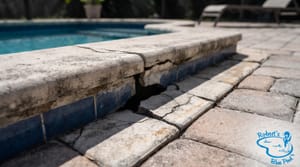
Heat cycles do the slow damage. A slab that swings 50 degrees between 6 a.m. and 3 p.m. expands and contracts against fixed coping every single day, and the joint sealant between deck and coping goes brittle after a few seasons of that. Once the joint opens, rain and splash-out run underneath the slab instead of off it. We cover the mechanics of that movement in why Miami pool tile and coping crack when it gets hot.
Then there is what sits under the deck. Miami-Dade's oolitic limestone drains fast, which sounds like good news until a weeping return line starts washing the fines out from beneath your slab. The deck settles in one corner, the settle cracks the surface, and a plumbing repair turns into a deck job. That progression is the expensive half of what a slow pool leak really costs. Any overlay you spray over a moving slab will telegraph the crack back within a season.
Salt air adds a third clock along the water. Owners in Bal Harbour, Surfside and Key Biscayne see sealer break down and efflorescence bloom faster than owners eight miles inland, on the same product.
Four Pool Deck Resurfacing Options for Miami Heat
Acrylic and Cementitious Overlays
A knockdown or spray-texture overlay builds up about a sixteenth to a quarter of an inch over your existing slab. It costs the least of anything here, adds real texture for grip, and changes deck height so little that your door thresholds and drain grates stay where they are. The catch sits underneath. An overlay bonds to the slab, so it inherits every crack and every settled corner in that slab. Fix the movement first or you buy the crack twice.
Keystone Kool Deck
Mortex invented Kool Deck in Tucson in 1962, and the formula still does what it was built to do: a sprayed Portland cement and aggregate topping that reads cooler underfoot than bare concrete and cures as hard as the slab beneath it. Mortex specifies application over freshly poured concrete inside 28 days for the best bond. Retrofitting it over a 20-year-old deck works, and the result lives or dies on how thoroughly the crew preps and profiles the old surface.
Travertine Pavers
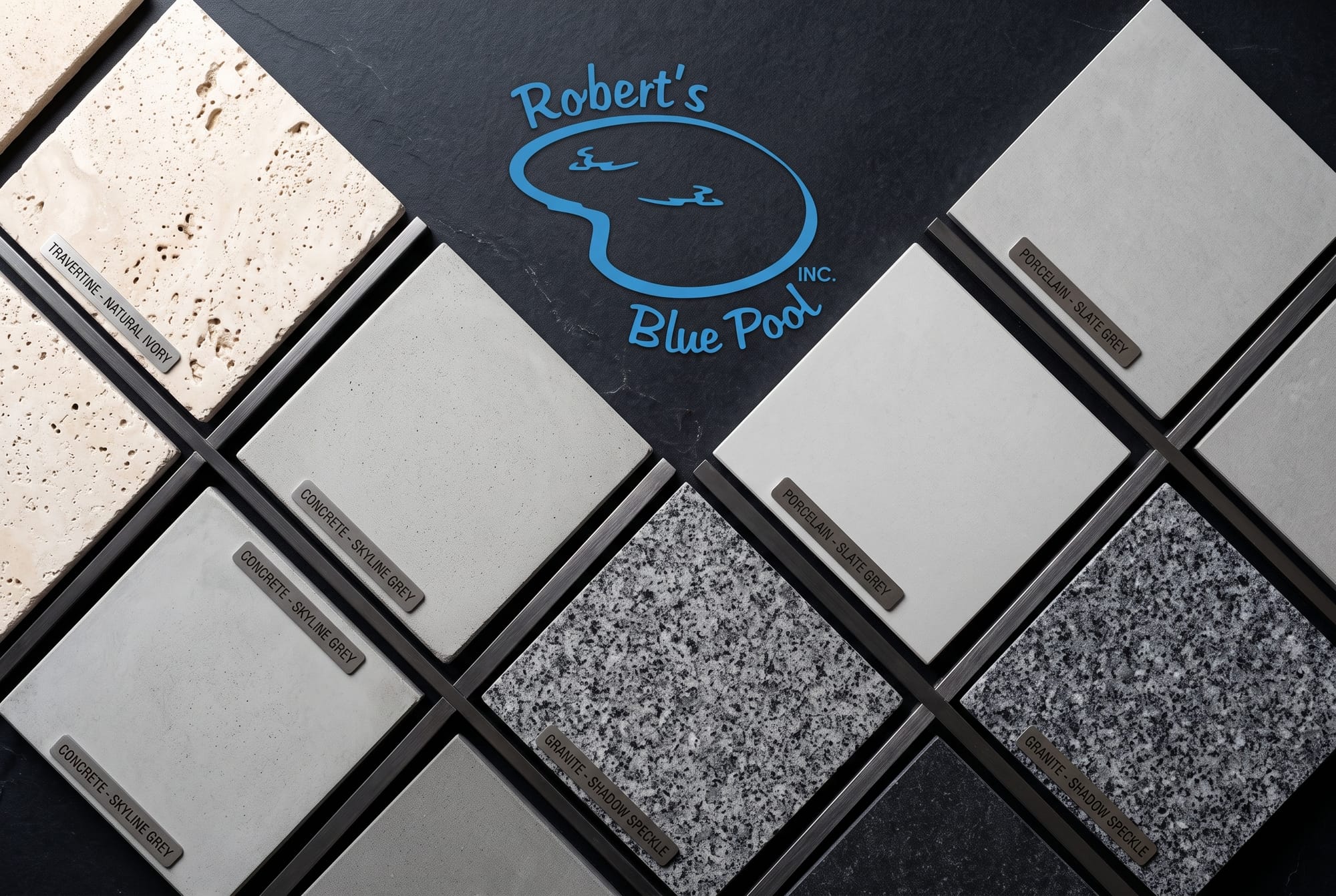
Travertine wins the barefoot test and it wins on physics, not color. The stone is porous, so it sheds heat instead of banking it, which is why a cream travertine deck reads 20 to 30 degrees below a concrete one at 2 p.m. It is limestone, so it etches. Muriatic acid dropped during a chemical service, or heavy chlorinated splash-out from an unbalanced pool, will leave a dull print in the stone. Ask your service tech to carry the acid in a closed container across a travertine deck.
Concrete and Porcelain Pavers
Set on a compacted sand base, pavers ride slab settlement instead of cracking with it, and a damaged unit lifts out for replacement without a single saw cut. Two things to watch. Dark pigment pushes surface temperature back toward the 140s, which erases the reason most Miami owners resurfaced in the first place. And porcelain, which absorbs almost no water, needs a published wet DCOF rating before it goes anywhere near the pool edge.
What Miami-Dade Lets You Do Without a Permit
The county's permit exemption list is more generous on decks than most homeowners expect. Section III of the Miami-Dade exemptions covers concrete slabs outside the building, and it names open patios, walkways and pavers as work that needs no building permit. Item 9 exempts resurfacing of a pool that does not affect any electrical connections. One cap applies to all of it: the aggregate cost of exempted work in any 12-month period cannot exceed $5,000.
Florida House Bill 803 opened a second door on July 1, 2026. Single-family homes, duplexes and townhouses can request an exemption for work valued under $7,500 by filing a written request plus the contract through the county portal. Two limits matter for pool decks. Properties sitting partly or wholly inside a FEMA flood hazard area do not qualify, which rules out a good share of Miami-Dade, and you cannot split a project into phases to slide under the number.
The electrical carve-out has no exceptions. Miami-Dade states that all repairs or replacement of electrical equipment on existing swimming pools require an electrical permit. That reaches further than deck lights. Under NEC 680.26, the perimeter surface within three feet of the pool wall belongs to the equipotential bonding grid, so demolishing and re-pouring that band puts the bonding grid in play. Any contractor who offers to skip that step is offering you a liability, not a discount.
When to Schedule Pool Deck Work in Miami
Not in August. Cementitious overlays flash-cure on a 100-degree slab, and a 3 p.m. downpour on a green surface ruins a morning's work. Our crews book deck resurfacing into the dry season, November through April, when the slab temperature and the rain odds both cooperate.
Use the wait. If your interior finish is also near the end of its run, pairing the two jobs shares the demolition, the dumpster and the mobilization, and it saves you a second round of dust. Robert's Blue Pools has been sequencing that work across Miami-Dade since 2007, and we would rather tell you your deck has four good years left than sell you a surface you do not need yet. Get the slab and the sub-base evaluated first, then pick the material.
Before you price a single square foot of travertine, have someone read the cracks in your slab. Call Robert's Blue Pools at (305) 762-7665 and we will tell you what your deck actually needs.