The first thing a contractor should put in front of you is the engineer's stamp. Not the brochure. Not the color samples for the super gutter. The signed and sealed structural drawings for your cage at your address.
Miami-Dade sits inside Florida's High Velocity Hurricane Zone. Every pool enclosure built in this county falls under Florida Building Code Chapter 16, Section 1620, and Chapter 20 for aluminum. For a standard residential pool cage, the code sets a 175 mph 3-second gust design wind speed under ASCE 7-22, Risk Category II. Anything less is either an illegal structure or one drawn up for the wrong jurisdiction.
Before you sign a contract with any enclosure company, read this. The cheapest bid skips something the code requires, and you find out either at inspection or during a storm.
Two Design Paths, One Decision
Florida Building Code gives you two ways to engineer a pool cage. You pick one before the drawings get stamped.
Section 2002.4 keeps the screens in place through a storm. The frame has to resist full wind load with the mesh acting as a sail. That calls for heavier aluminum extrusions, tighter fastener spacing, and a higher price. You do nothing before a hurricane besides check the water level.
Section 2002.7 is the screen removal alternate. The engineer designs the frame to survive with no mesh. You sign paperwork agreeing to cut the screens out when sustained winds cross 75 mph. Florida Engineering LLC has documented that stress on the frame drops by up to 60 percent once the mesh is out.
Most South Florida cages get built under the removal alternate because the frames are lighter and the install runs cheaper. That is a fine choice if you plan to be home and able to cut panels out the afternoon before landfall. If you travel half the year or split time between Miami and somewhere north, Section 2002.4 is the honest answer. Tell the contractor which path you want before they price the job.
The Super Gutter Is a Structure, Not a Gutter
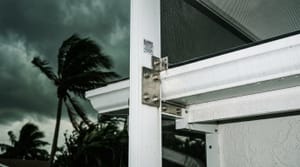
The aluminum channel that runs along the house side of your cage carries two jobs. It moves roof runoff away from the deck, and it serves as the primary ledger that transfers the weight and lateral load of the whole enclosure into your home's fascia. When pool cages fail in hurricanes, the super gutter connection is where they fail first.
Local fabricators like On-Site Aluminum and SuperGutter sell the profile in 5-inch and 7-inch sizes. The 7-inch version is what you want on any cage over about 800 square feet, or anywhere inside a mile of Biscayne Bay. The fasteners into the fascia should be stainless steel, 410 or 316 grade. Galvanized screws corrode through at the head in roughly four years of salt air.
If a contractor quotes 5-inch gutter on a large coastal cage to hit a lower price, the structural margin is gone before the first storm season ends. Ask for the gutter profile by model number and ask which Miami-Dade Notice of Acceptance covers it. Every HVHZ aluminum extrusion sold in this county carries one.
Aluminum Grade Matters More Than the Logo
The two alloys that show up on pool cage quotes are 6005-T5 and 6061-T6. Florida Building Code Chapter 20 covers both and both are legitimate. Shops pick 6005-T5 for screen cage uprights and beams because it extrudes cleaner and holds anodization longer in coastal air. 6061-T6 has a higher yield strength and appears in larger beams or mansard tie beams.
What you should not accept is "structural aluminum" with no alloy or temper listed on the drawings. That is the language a shop uses when it is buying mill-run stock from whichever supplier had inventory that week. Since Miami-Dade requires NOA approval on every extrusion, vague material specs are a red flag.
The Barrier Question
A screen enclosure can count as your pool's required safety barrier under Florida Statute 515 if it meets the height and access rules. The fence has to stand at least 48 inches tall measured from outside grade. Any gate needs a self-closing hinge and a self-latching mechanism, with the release at 54 inches or higher so a small child cannot reach it.
If the enclosure blows down in a storm, the pool loses its safety barrier until the rebuild is done. Owners in Bal Harbour, Fisher Island, and other coastal zip codes ran into this after Irma, when rebuild queues stretched past six months. A temporary mesh fence with a compliant gate costs a few hundred dollars and keeps you in compliance while you wait for the cage crew.
What to Ask Before You Sign
Before the deposit clears, you want written answers on five points.
- Which code section, 2002.4 or 2002.7, governs the design.
- The aluminum alloy and temper for every primary member.
- The super gutter profile and its Miami-Dade NOA number.
- The fastener grade at the house connection.
- The engineer's name and PE license number, with signed and sealed drawings attached to the permit application.
If any of those answers come back as "we handle that" or "the permit office will tell you," keep shopping.
Before Storm Season Arrives
For a cage you already own, walk it this week. Look at every fastener along the super gutter for rust bloom. Push on the uprights near the deck. Any give means the anchor base has corroded or the concrete spalled. Check the screen edges where they meet the spline track for lifting.
Robert's Blue Pools has worked on pool decks and equipment pads across Miami-Dade since 2007. We coordinate with enclosure engineers and aluminum contractors on projects from Coconut Grove to Sunny Isles. For a pre-season inspection on your cage anchors and deck connections, or a referral to a licensed enclosure engineer before hurricane season opens on June 1, call Robert's Blue Pools at (305) 762-7665.